Xbox, 25 years later
Microsoft's console debut defied the doubters and stuck the landing.

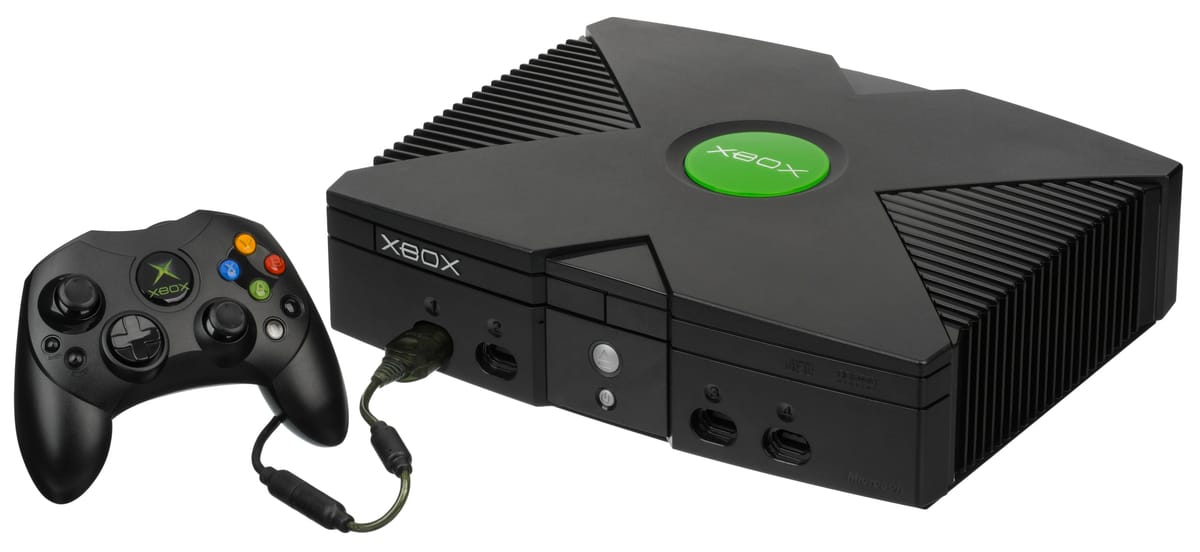
There was something intimidating about the Xbox.
(The first one. No, not the Xbox One, that was the third one. The original Xbox.)
No, sorry: there were a lot of intimidating things.
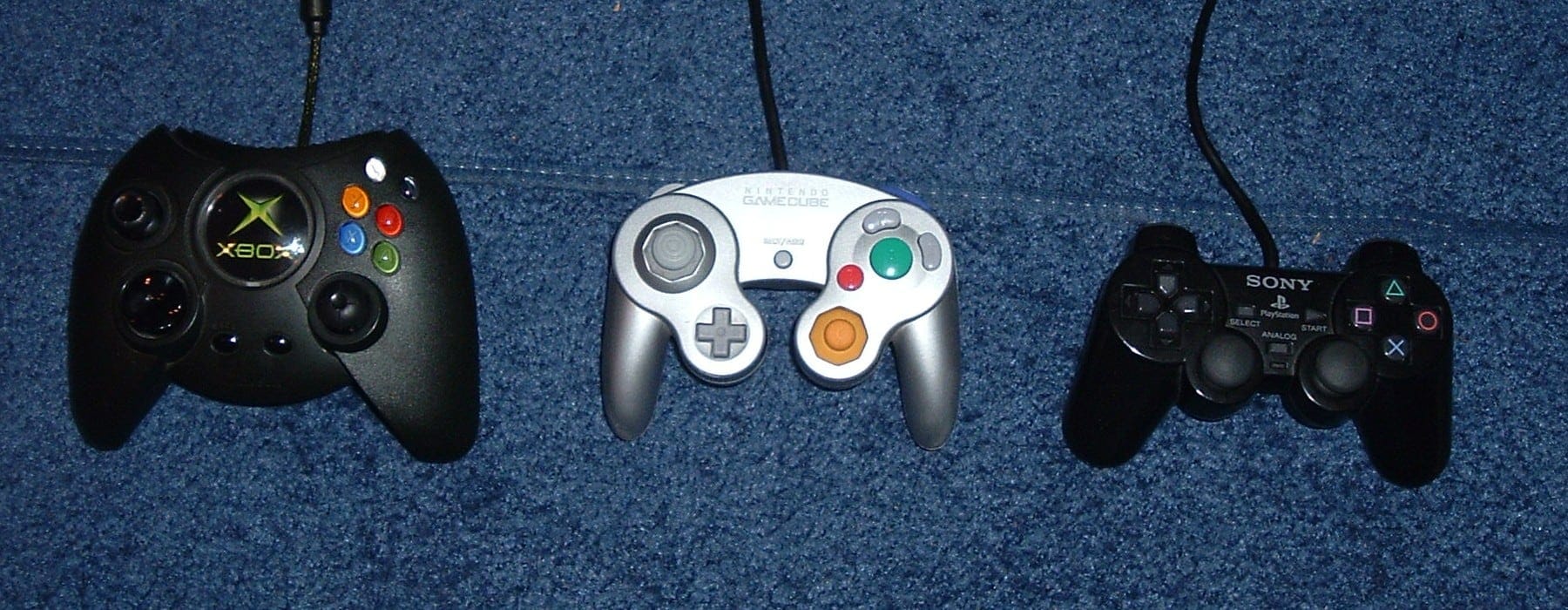
The packed-in “Duke” controller was notoriously enormous; gripping the handles felt less like holding a sleek new bit of tech and more like holding two potatoes. The box itself was shaped like a giant X with a bright green jewel in the middle, making leaving you no doubt as to what it was. It made unfamiliar pops and clicking sounds when it was on, courtesy of the built-in hard drive, the first console to have one. It wasn’t playful like the compact and colorful Nintendo GameCube. The Xbox was serious stuff.
It helped that it came from a serious player: Microsoft. After the bruising antitrust fight of the late 1990s, Microsoft’s marketshare was higher than ever — a sharp contrast to its sinking reputation. Everyone used Microsoft products like Windows and Office and Internet Explorer, but nobody was particularly happy about it.
Now this company of all companies, the guys who made Excel and killed Netscape, was jumping into gaming. It was hard not to be nervous; hard not to imagine Microsoft crushing Nintendo and Sony the same way they’d dominated another innovative and creative rival, Apple.
(Funnily enough, the first iPod launched five days before the Xbox, setting the scene for Apple’s rapid rise. But that’s a story for another time.)
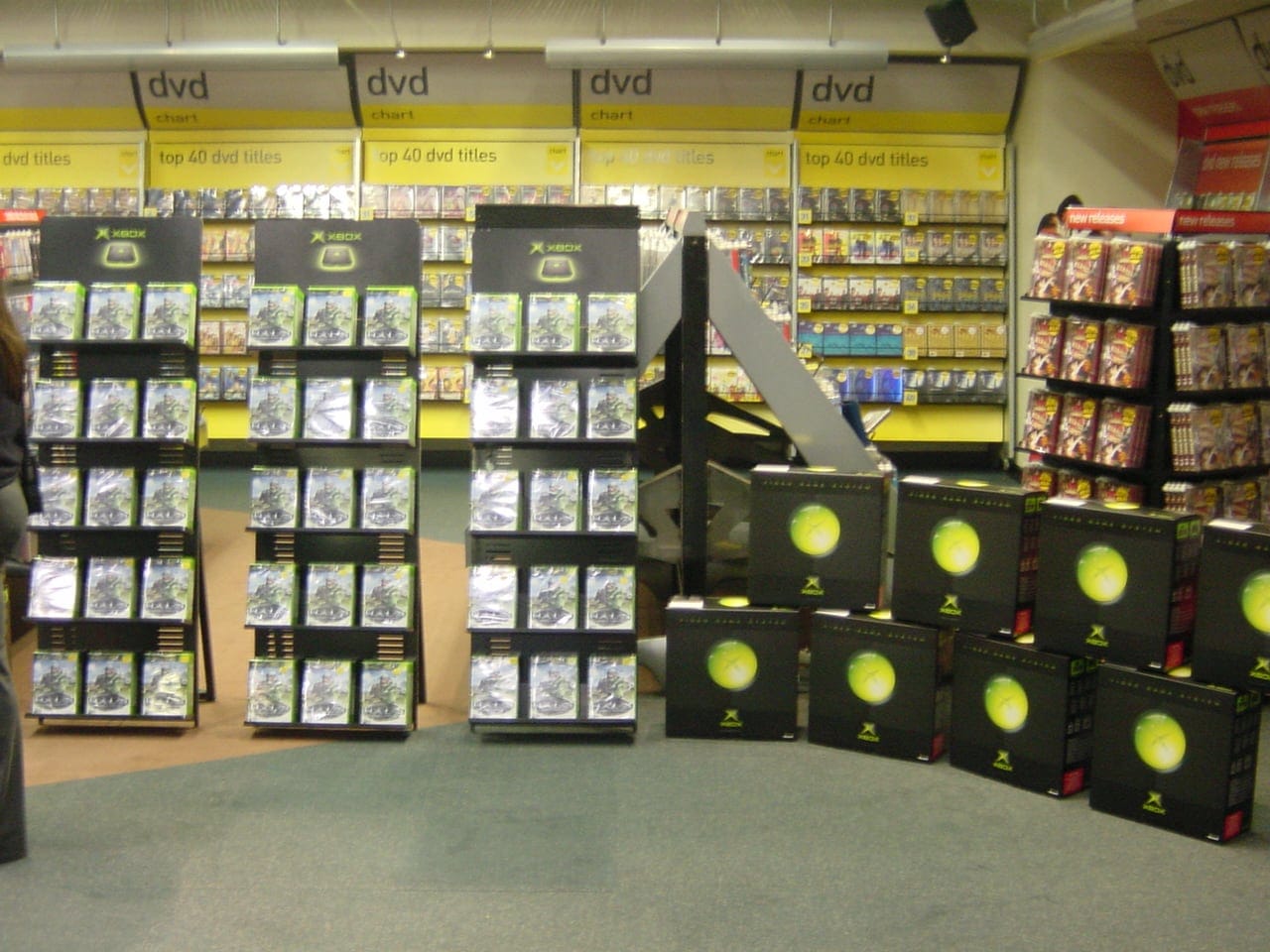
And yet the original Xbox, released 25 years ago, was a charming console arguably because of those same things. Yes, it was big and bulky and loud. Yes, the bright green accents and X branding screamed “I was made for American teen boys.” But that’s exactly what it was, and not being ashamed of that made it endearing. I mean, you can’t accuse Microsoft of being subtle: the box was shaped like a giant X, for crying out loud.
Coming right out with Halo at launch also silenced any idea that stuffy, boring Microsoft doesn’t know ball. Halo wasn’t just an excellent game, it could only have happened on Xbox. Only a Western-focused console maker like Microsoft, with ties to the PC gaming industry, would have bet on a first-person shooter from a little-known Mac developer as the flagship for their new machine. And, with an Ethernet port on every Xbox, it was so easy to set up LAN parties to get 16 people playing Halo together.
I remember lugging my Xbox over to a colleague’s house for a Halo LAN party. There were 8 of us divided into two teams of four, each team in an adjacent room. I spotted the other team piled into a Warthog heading for our base and chucked a grenade at them in desperation. The grenade bounced right into their vehicle, wiping out the whole team in one go. The resulting screams from the other room is a memory I hope to never forget.
I admit that, at first, I misunderstood the Xbox’s software strategy. As the first major American console since the Atari days, the Xbox lineup naturally skewed more towards Western games. There were no cute mascot games like Mario, Sonic or Crash Bandicoot; no quirky Japanese titles. But this felt really off-putting to me. It looked like Microsoft was ignoring traditional console fare, instead courting PC developers to bring over computer classics like Morrowind. Sorry guys, but if I wanted games like that, I’d have a PC.
How wrong I was.
Ultimately, those developers are why the Xbox was able to carve a place in the industry in the shadow of the record-breaking PlayStation 2. The library was unique and memorable, filled with exclusives that brought brand-new experiences to console gamers like me.
Star Wars: Knights of the Old Republic is emblematic of this. BioWare’s first major console title, this sweeping RPG takes you on an adventure as epic (and shocking) as the films, only set 4,000 years earlier. The level of choice and freedom in the game blew me away because I’d never played a PC-style RPG before. And BioWare were only able to bring this style of game to a console audience because the Xbox was so familiar to them as PC developers. “We could do the things we wanted to do on the Xbox without as much effort as we'd need to do it on the PS2 or GameCube,” producer Mike Gallo told GameSpot in 2002.
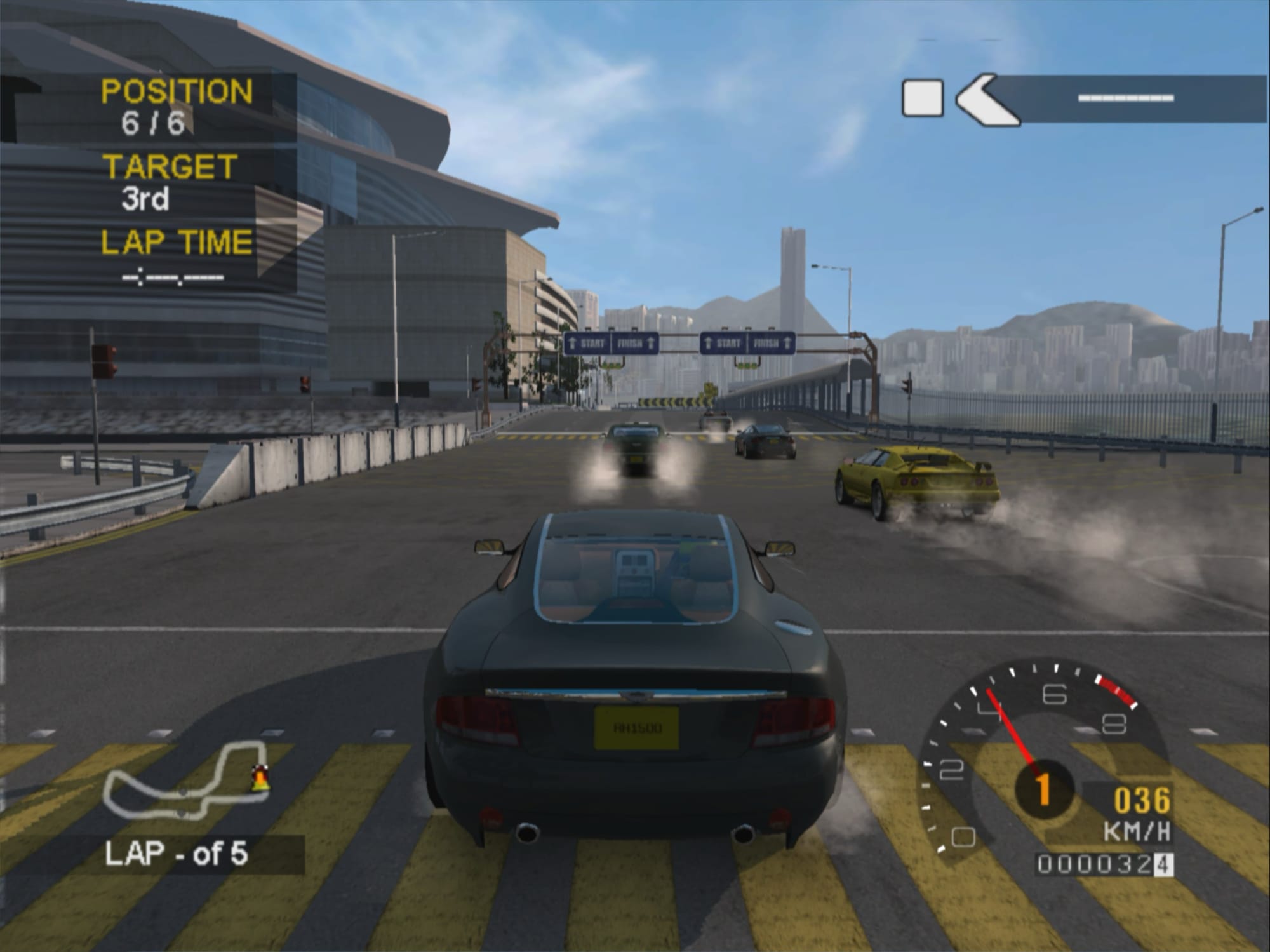
There were so many other great games that deserve a shout-out. Project Gotham Racing, released on Xbox launch day alongside Halo, remains one of my favorite racing franchises of all time; it’s criminal how Microsoft has forgotten and buried this part of Xbox history. Star Wars: Battlefront wasn’t an Xbox exclusive but it was best on that platform because the Ethernet port enabled just as many LAN parties with my friends as Halo. And Midtown Madness 3 was the first Xbox Live game to properly hook me. I’m pretty sure that on the first day alone I played that game online for over 12 hours straight.
Oddly enough, the reason I loved the original Xbox so much was one of the things that worried me so much about it.
Everybody knew that the Xbox was a Trojan Horse. Nobody really believed that stuffy, boring Microsoft was doing this because they loved games: we all knew that this was the latest salvo in their attempts to take over the living room. Okay, maybe the first Xbox was just a console, but surely they’d add more over time…
 Ravi Hiranand
The thing is, though, the original Xbox did take over my “living room.” I had four of them, scattered all over my family’s home: one for myself, one in the living room, one for my sisters, one for my mother. But my mom wasn’t playing games on it, she was watching TV.
Xbox Media Center (XBMC) was an incredible piece of software for modded Xboxes. It allowed you to stream movies and TV shows from a network PC or Mac. It automatically scraped artwork, actors and a synopsis; an optional toggle allowed you to hide that until after you’d seen an episode to avoid spoilers. It could stream music from your computer’s iTunes library. It served as a launcher for other apps, so you could switch over to play NES, Game Boy or SNES emulators. It had a news ticker that you could configure with whatever RSS feed you wanted, so I had football transfer news scrolling across my screen. It even, if I recall correctly, could display the current local weather.
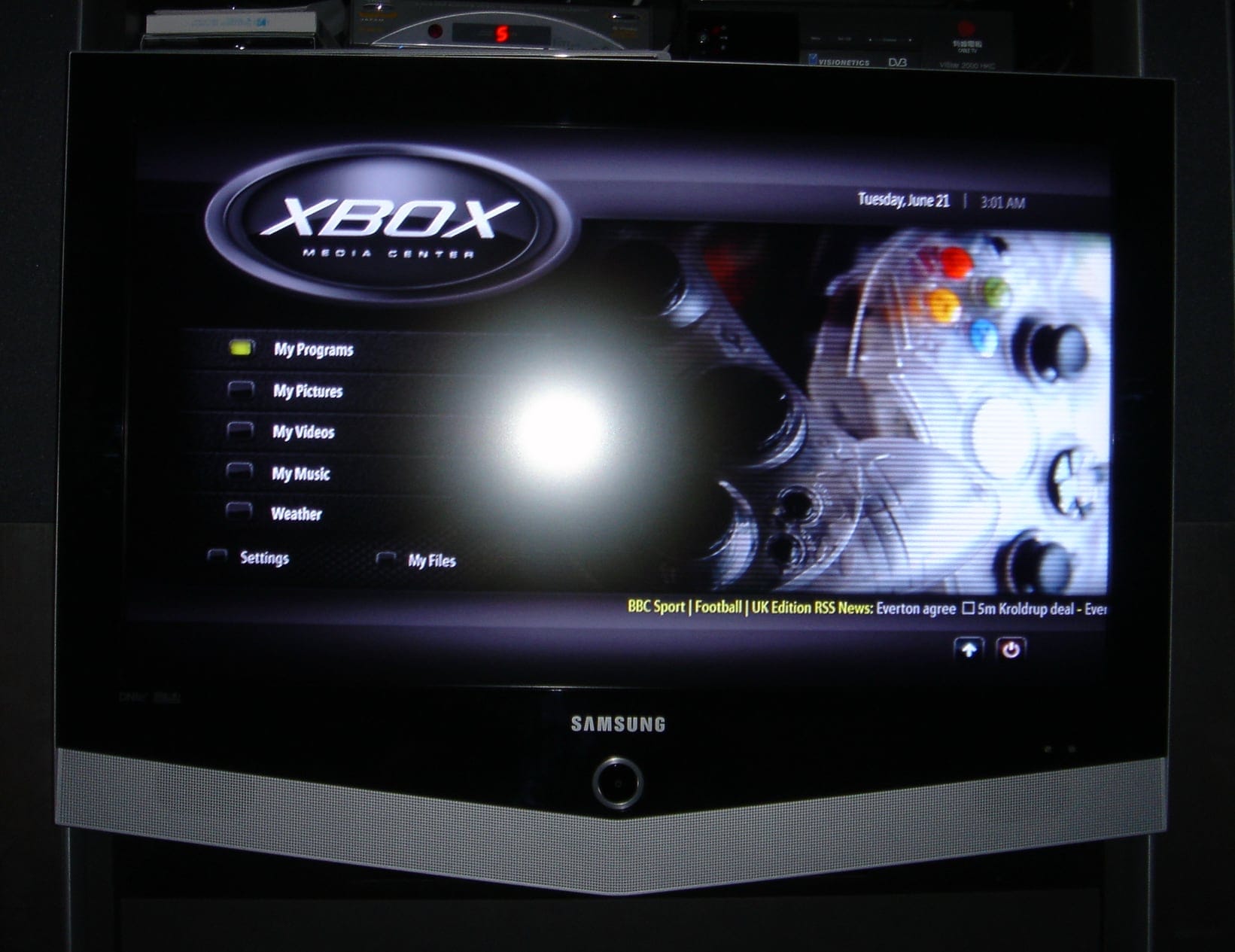
If this sounds basic, remember, this was 2004. We didn’t have smartphones. Always-on broadband internet connections were only a few years old. XBMC being this fully-featured was mind-blowing. Again, my whole family consumed TV this way for years. We didn’t retire those Xboxes until we switched to the Apple TV around 2009.
In recent years, Microsoft has strayed far from the ideal path and are arguably closer to exiting gaming than ever before. With their first console, though, they disproved the doubters like me and showed that they do belong in the industry. The original Xbox was a massive, awkward lump of a console, but it was an eminently lovable one too.
 Ravi Hiranand