Xbox and the perils of being too online
Why any strategy built on appeasing the loudest voices on social media is doomed to fail.

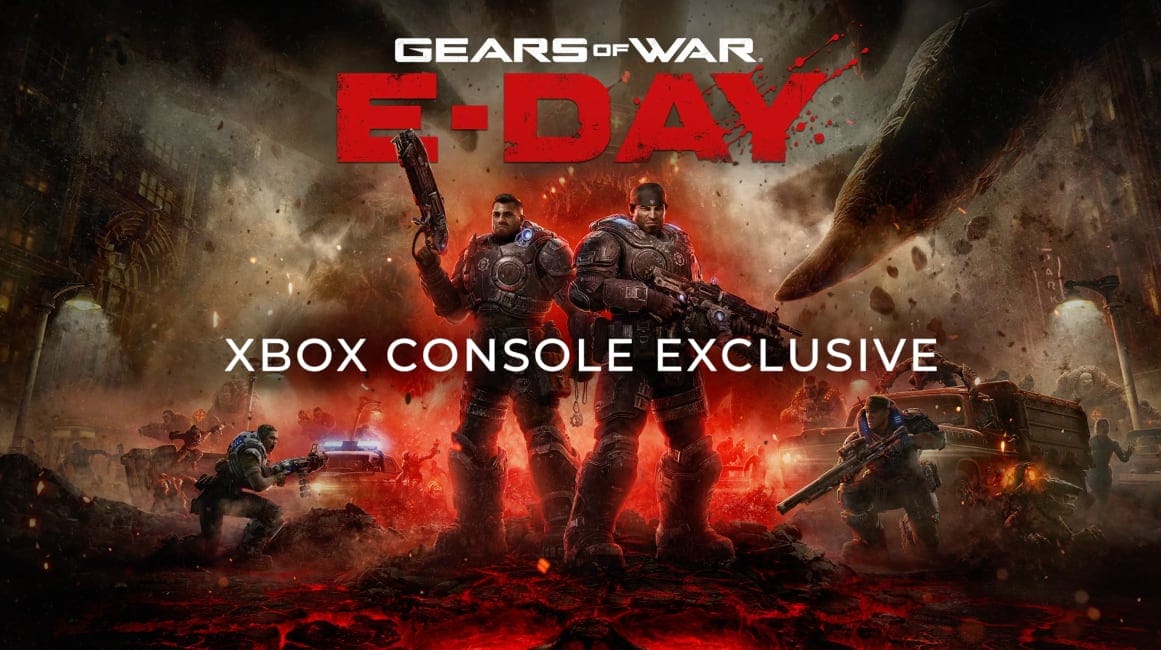
Xbox is flip-flopping again.
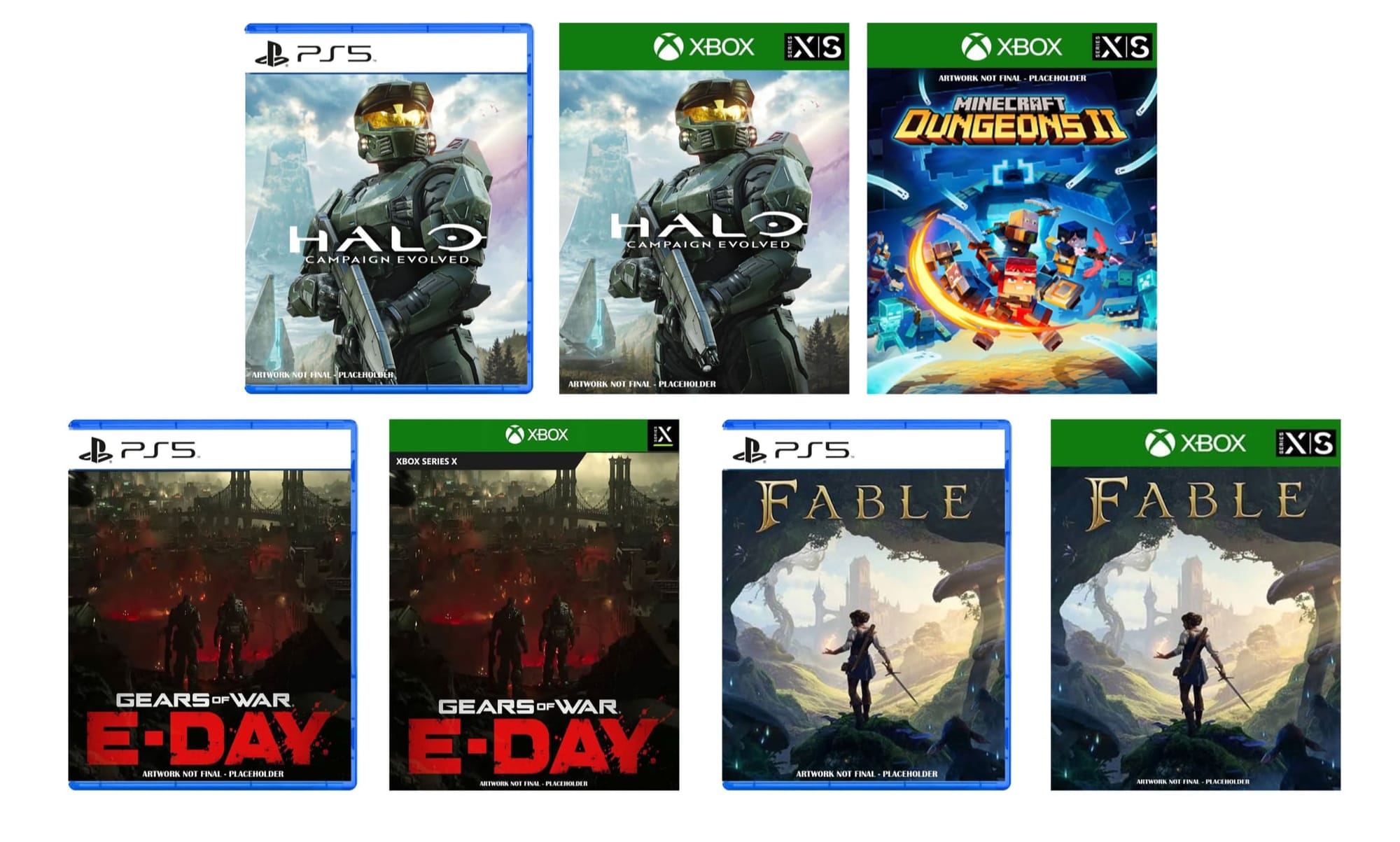
Microsoft’s gaming chief Asha Sharma opened the company’s annual showcase by proudly stating that Gears of War: E-Day, the big holiday game, will be an Xbox console exclusive.
It is the latest twist in Microsoft’s clumsy attempts to chart a new path for the ailing Xbox. Phil Spencer, Sharma’s predecessor, publicly backed releasing Xbox games on other platforms, though his execution of that strategy left much to be desired. Similarly, the messaging here is muddled again: the headline for the press release touts “The Return of Exclusives” but only two games (E-Day and Clockwork Revolution) are exclusives. Most of the other games shown, including Halo, will come to PlayStation 5.
 Ravi Hiranand
After the showcase, Sharma’s deputy had the opportunity to offer clarity in an interview and absolutely failed to do so: Matt Booty said that exclusives would be considered on a “case by case” basis. In this case, that call seemingly happened so late that the PS5 version of E-Day is allegedly almost complete and retailers were about to put up preorder pages for it.
Look, I genuinely don’t know whether embracing exclusives will save Xbox or not. I have my doubts, but these doubts aren’t necessarily rooted in any analysis of their strategy, but rather by the circumstances around it. To be blunt: the new Xbox chief is too online and too eager to please fanboys on social media.
Sharma first signaled a willingness to move away from exclusives on nobody's favorite hellsite, Twitter. (I refuse to call it X and I’m not sorry about that.)
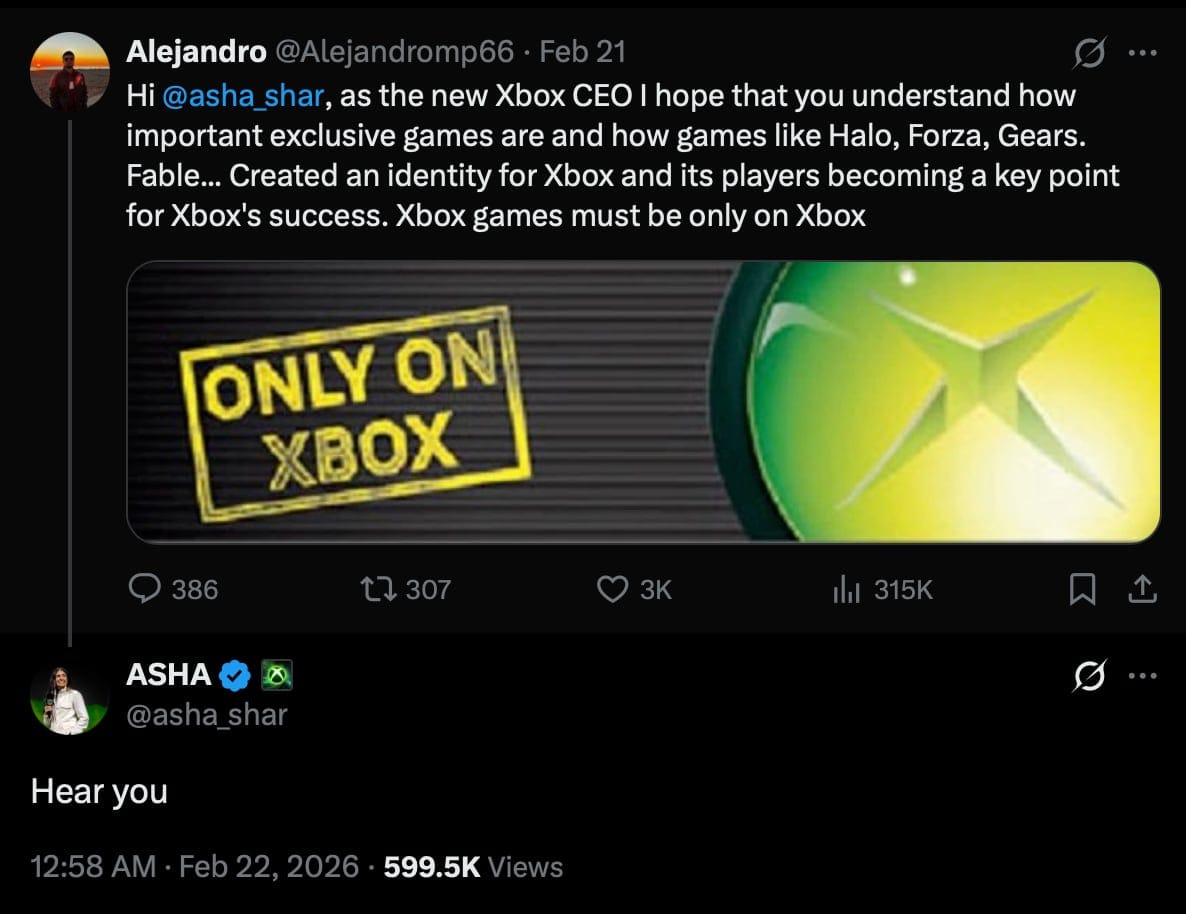
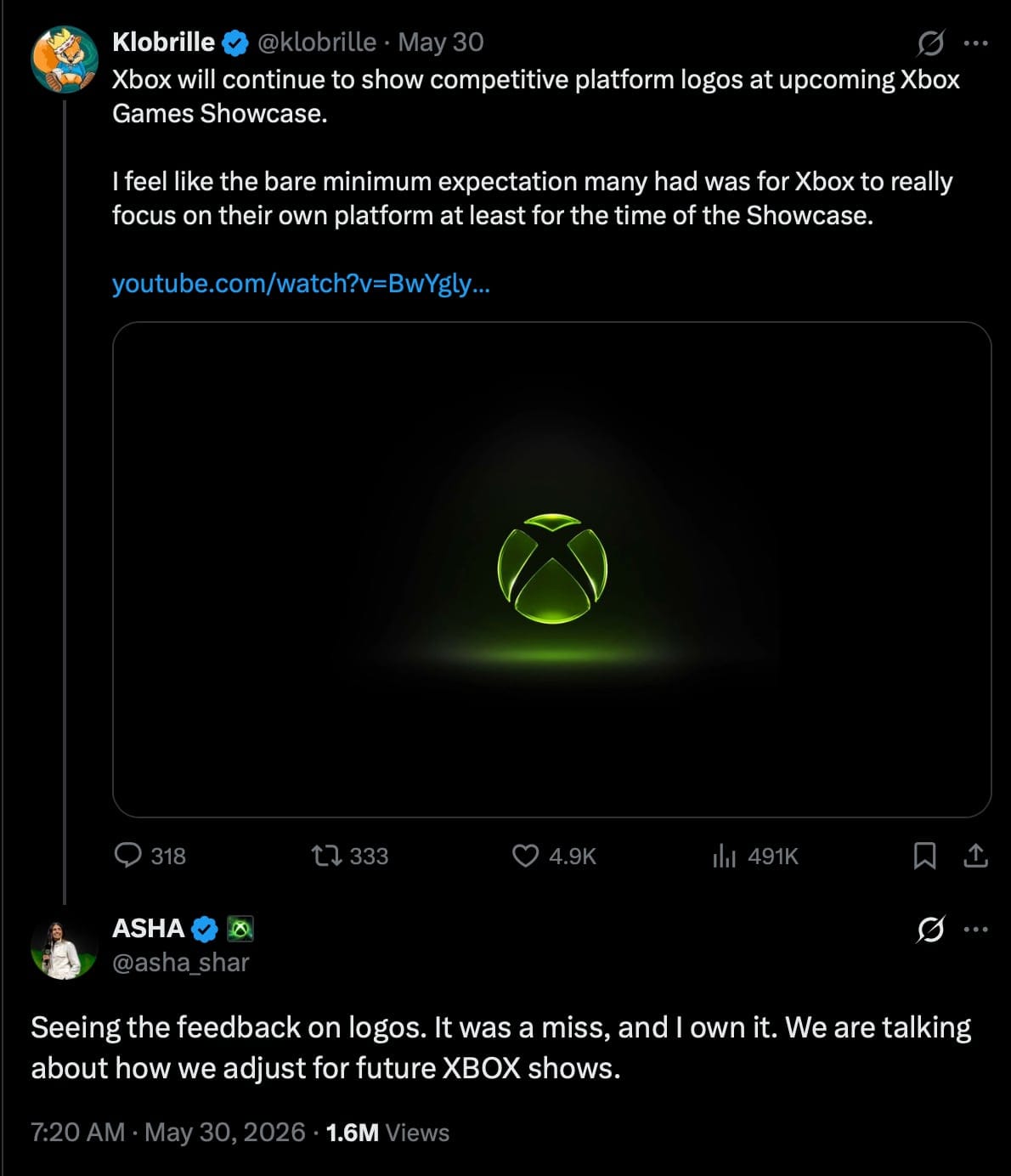
It’s not the first time she’s engaged with people on there about exclusives. After Booty confirmed that Microsoft would take the logical step of displaying the PS5 logo in trailers when a game was coming to PS5, she agreed with a poster who objected to that, calling the decision “a miss”.
She’s even engaged those fans to weigh in on much bigger issues: she posted a poll asking whether to rename the brand from Xbox to XBOX. Predictably, the shoutier version won, and Microsoft now uses XBOX in official communications. (Again, no, I'm not going with that.)
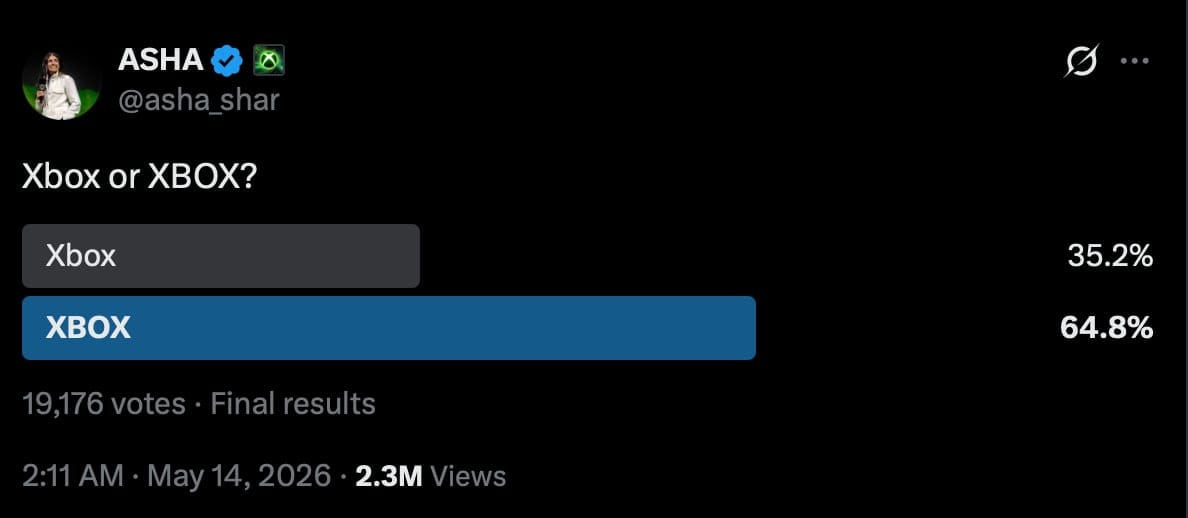
I’d assume that this goes without saying, but I guess I have to say it: making major business decisions based on the whims of people on Twitter is absurd. It was absurd before and it’s even more absurd now after the exodus of decent people off the platform.
Twitter has always had a huge gap between a minority who post and the vast majority who lurk; it has always been easy to forget that the loud voices of the few do not always represent the wishes of the masses. And after the exodus, the ones who shout are even less representative of the overall population than before.
Appeasing those loud voices may feel like an easy win, but whatever small, short-term gains are lost when you understand that you’ve become beholden to them.
Take Star Wars. Remember how the worst people you know went nuts about The Last Jedi? Disney panicked and reworked The Rise of Skywalker to appease that crowd, reversing many of the previous film’s bold swings. And guess what? It didn’t work! The Rise of Skywalker grossed less than The Last Jedi and received more mixed reviews. Nobody was happy with The Rise of Skywalker, neither fans of The Last Jedi nor its critics.
Twisting yourself to suit the whims of this crowd is not a viable long-term strategy. Worrying about placating them turns into paranoia and paralysis. And that's how you get a series of stalled Star Wars projects and The Mandalorian and Grogu, a bland film that doesn’t even try to adopt any themes or ideas. (The best you can say about it is that it’s a decent but forgettable two-hour diversion.)
Shortly after he returned to Apple, Steve Jobs revealed the big secret about consumers: they don’t actually know what they want. "It's really hard to design products by focus groups,” Jobs told BusinessWeek in 1998. “A lot of times, people don't know what they want until you show it to them."
Nintendo, always one to chart their own course, provides a useful example here. All eyes were on how they’d follow up The Legend of Zelda: Ocarina of Time, widely hailed as the best game ever made. Each generation of consoles is more powerful than the last, so the reasonable assumption was that a new Zelda game on Nintendo’s next console would have more detailed graphics: something darker, grittier, more real.
But when they unveiled the sequel, Nintendo took a sharp turn in the opposite direction. The Wind Waker looked like an interactive cartoon. It was unique, gorgeous… and people hated it. It wasn't what they thought they wanted. The game's reception improved massively when it came out and people realized how cohesive and thematically appropriate the new look was. But there was still a lingering desire, an unscratched itch, for Zelda to go down the path of more realism. A few years later, Nintendo took the wraps on the next Zelda game, Twilight Princess. When the first trailer showed it taking on a more realistic look that referenced Peter Jackson’s Lord of the Rings films, there were loud cheers.
And yet, today, The Wind Waker is far more celebrated and beloved than Twilight Princess. The once-derided cartoon art style is seen as timeless and memorable; the relative realism of Twilight Princess more bland and dated. The effect is more subtle, but there's a reason that the visual direction of Breath of the Wild takes more cues from The Wind Waker than Twilight Princess.
People don't know what they want. Microsoft, and Asha Sharma, need to block out the noise and focus on making the right call, not the one that plays best on social media. I don’t know what the path to success is for Xbox, but I know that it won’t come from listening to @blaze420gamer69.