History repeating
The backlash to the Ocarina of Time remake carries echoes from the past.

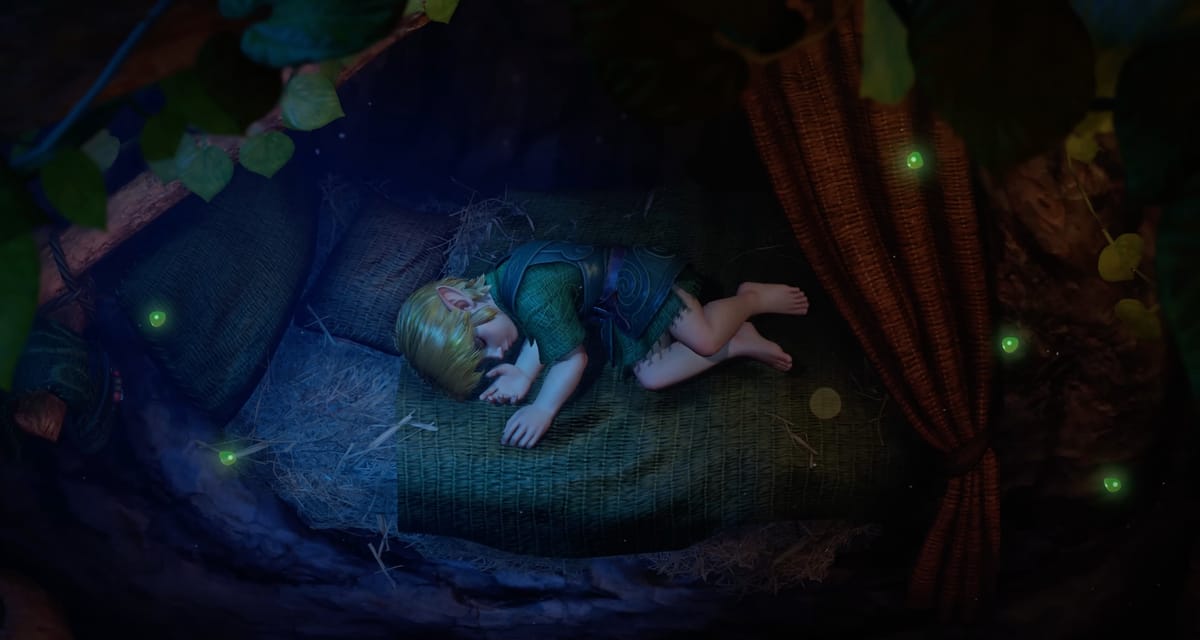
Nintendo is remaking the greatest game of all time, and not everyone is happy about it.
Tuesday’s Nintendo Direct ended with a brief clip showcasing The Legend of Zelda: Ocarina of Time remake. It's only a couple of minutes, but what was shown suggests that the game’s art direction leans away from the more stylized looks of previous titles and more towards grounded realism. The graphics are sharp enough to show the stitching on Link’s bedsheet. His clothes are far more detailed than the plain green tunic of before, with layers, textures and patterns.
It’s a similar direction to this month’s Star Fox 64 remake, which was also controversial for hewing towards realism. Not everyone is a fan; a common quip on social media is that it resembles a soulless Unreal Engine 5 tech demo that puts the emphasis on fidelity over style.
Personally, I’m not sure that this is the right visual approach. But I’m also keeping an open mind. I want to see more before I decide, because I remember what happened the last time Nintendo overhauled The Legend of Zelda’s look…
All the way back in August 2001, just before the launch of the GameCube, journalists gathered outside Tokyo to see Nintendo reveal sequels to two of the most important and influential games of all time.
It wasn’t just that both Super Mario 64 and The Legend of Zelda: Ocarina of Time were wildly critically acclaimed. They were so much more than just good games, they were foundational ones: both titles established the principles of gaming in 3D spaces, introducing concepts that are still followed today. Expectations before the event were sky-high. How was Nintendo going to shake up the world this time?
First, Mario. Super Mario Sunshine appeared to be, well, “just” a next-generation Super Mario 64: the same sort of look, but with greater detail, set in a sunny town with a strange device on Mario’s back. So far, so conventional.
And then, Zelda. The lights went down. The teaser played. And we saw… a cartoon?
Link stood, facing the camera, before drawing his sword. But it’s a younger Link, with squat cartoon character legs, a big head and comically oversized eyes. His outfit was bold and bright, but plain; it lacked creases and detail, just the flat shading of a character that looked straight out of a Saturday morning cartoon.
A group of enemies burst in and spot Link. His extra-large eyes clearly show his fear as he runs away, switching to a cheeky grin when he spots his escape. Link leaps off a ledge and grabs a chandelier. The enemies follow by running straight off the edge and into empty space. They hover for a few seconds, defying gravity as their little legs uselessly kick out against the open air, before falling to the ground.
Sitting there in the audience, my jaw dropped. It didn’t look like a game. It looked like Wile E. Coyote trying, and failing, to catch the Road Runner. It was an inspired choice, as impressive technically as it was artistically. Everyone was blown away.
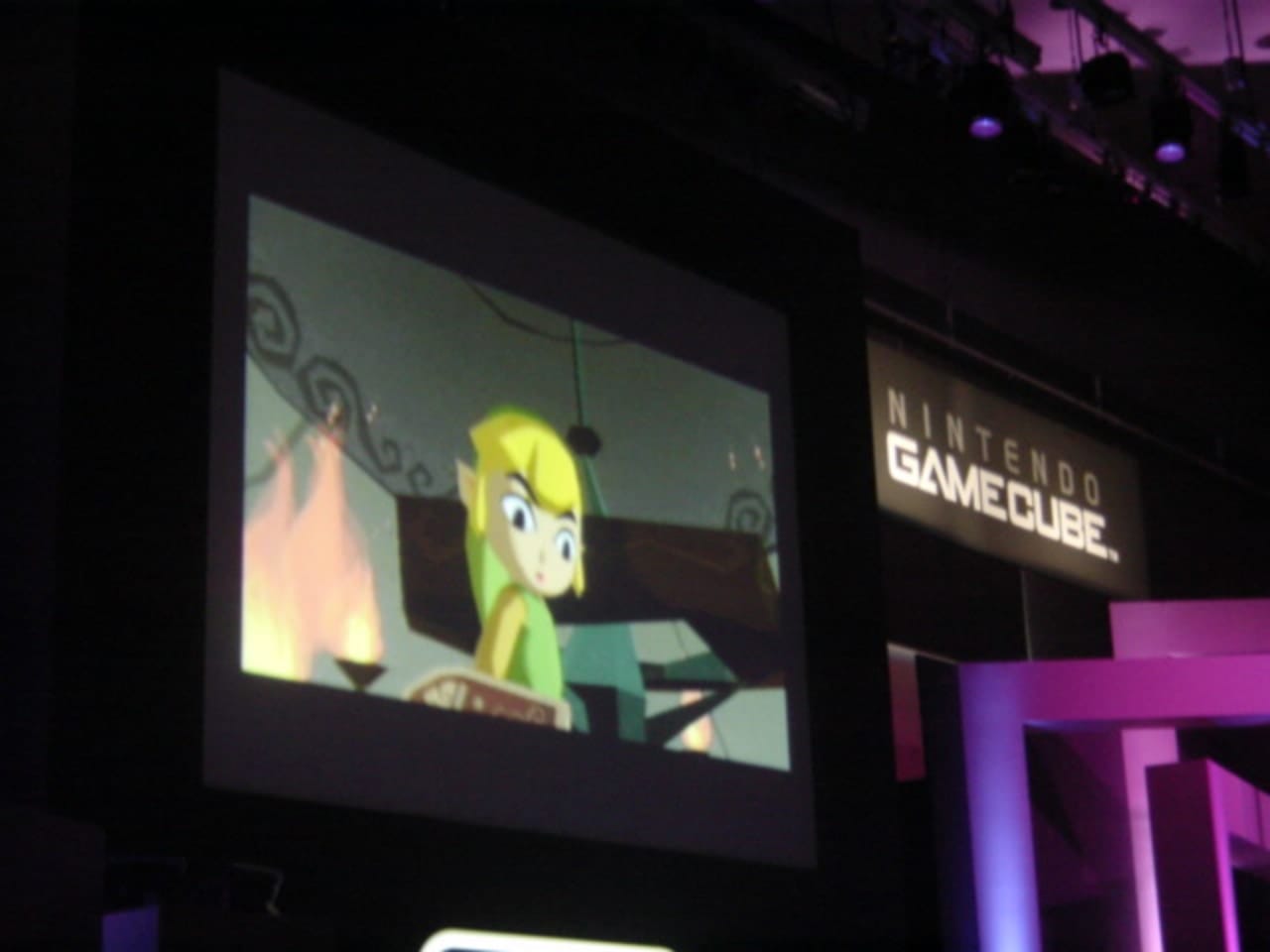
Leaving the hall, it was the only thing we could talk about. In the days before YouTube, before smartphone cameras, the only way to see it again was to peer into the viewfinder on a camcorder that recorded the trailer off the giant screen. We sat in McDonalds and passed it around, taking turns watching and rewatching, spotting new details and just generally basking in what we’d just witnessed.
Another journalist joined our table. He disappeared after the event because he needed to find a place to get online to file a story (again, these were the days before the internet was everywhere). He found a spot, sent his story, and took a peek at a few discussion boards. And he had a shocking message for us.
“You won’t believe this,” he said. “The internet hates it.”
We didn’t believe it. We couldn’t believe it. Everyone in that room who saw The Legend of Zelda’s toon makeover was united in praise. He was joking, right? How could anyone hate this?
They hated it because, the previous year, at the same showcase, Nintendo played a short snippet of what was presumed to be the next Zelda game. The 10 second clip showed Link and Ganondorf engaged in a sword fight. Both used designs that were clearly based on their appearances in Ocarina of Time, just with… more. More detailed faces. More elaborate clothing. More shiny surfaces and other touches. Ganondorf’s earring dangled free. The bumps and ridges on Link’s shield were clearly visible, an unfathomable detail after the flat, basic shapes on the Nintendo 64.
People fell in love with that. That was what they wanted — no, it was what they expected. They expected to see Ocarina, but better. They did not expect to see a Saturday morning cartoon. And cartoons are for kids, right? The previous trailer was for adults. This alleged abomination was derisively referred to as "Celda".
It was only after The Legend of Zelda: The Wind Waker was released that people started to appreciate it. Playing the game, you could see how the style made sense, because the cartoon look was a thematic fit for a younger Link. Seeing classic characters and concepts translated into this style was a delight. And it was just so cohesive: it was so satisfying to see things like the little cartoon puffs of smoke when a bomb went off. It's a timeless look that holds up today.
And it effectively formed the basis for Zelda’s modern look. Breath of the Wild is perhaps less Disney Afternoon and more anime in appearance, but it still has a more subtle version of the the cel-shaded look pioneered by The Wind Waker.
We’ve come full circle: where once fans complained about Zelda trading realism for cartoons, now they complain when it ditches the cartoons for realism. A brief snippet, presented without context, was not enough to sell fans on a visual reinvention for The Legend of Zelda. It also wasn’t enough to sell them on the Ocarina of Time remake’s new look. Seeing history repeat itself, I can't help but laugh.